The High Stakes of Lift Installation
In the lift installation and service sector, there is no margin for error. Projects operate in high-pressure environments where success is measured by strict handover dates and uncompromising safety standards.
Whether it is a new installation or a complex removal, the “critical path” of your project often relies on the availability of a reliable chain block hire service that understands the unique demands of the industry.
Last-minute equipment changes or a failed LOLER inspection mid-project can create immediate schedule chaos, leading to financial penalties and damaged client relationships. Our guide to chain block inspection covers the faults that most often cause a failed check.
Industrial Lifting Ltd acts as your technical partner, providing the rapid response and certified lifting equipment supplies needed to eliminate these friction points and keep your operations moving.
Versatility for Every Lift (The Range)
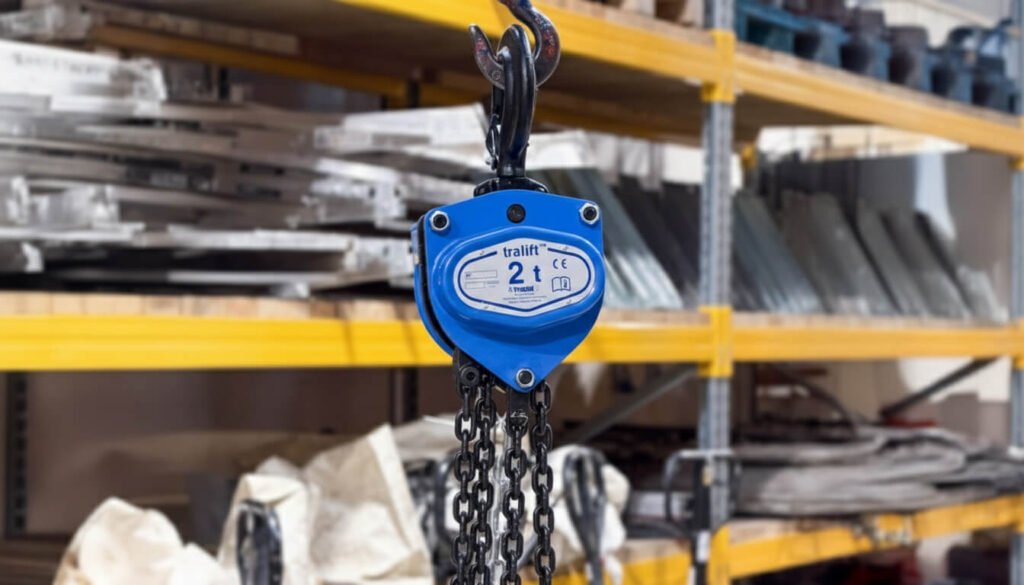
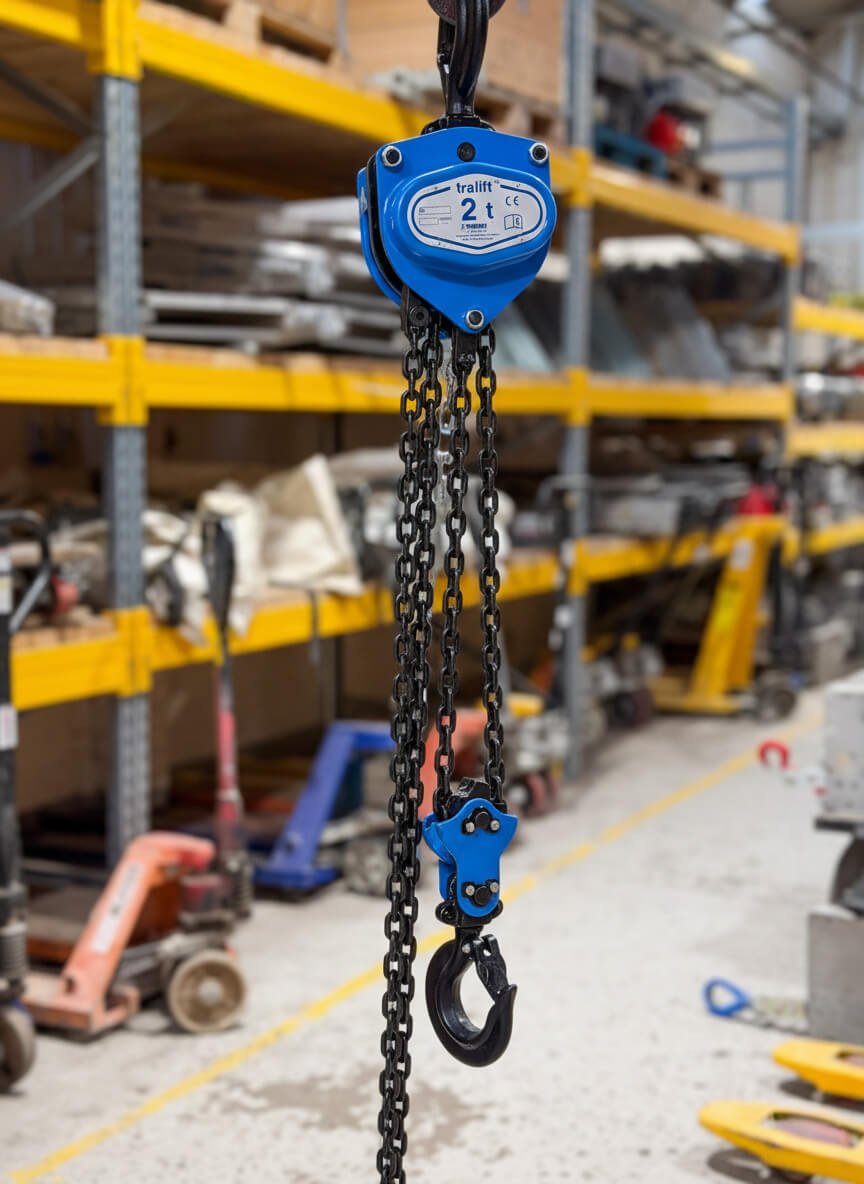
We understand that lift shafts present unique mechanical challenges, particularly regarding weight capacity and the depth of the shaft. To support every stage of installation, we maintain a comprehensive inventory of manual chain blocks held locally at our Stoke-on-Trent base:
- 500kg & 1t: Ideal for smaller components, secondary steelwork, and rapid rigging.
- 2t & 3t: The workhorses for standard elevator car positioning and counterweight installation.
- 5t: Heavy-duty units designed for the most demanding machinery and structural lifts.
Crucially for the lift industry, we provide various Height of Lift (HOL) options. We recognise that a standard 3m chain is rarely sufficient for a multi-story lift shaft.
By providing extended chain lengths, we ensure your team can operate safely from the pit to the motor room without improvised rigging. Every block in our fleet is inspected by LEEA-certified engineers to ensure it is fully LOLER-compliant and ready for immediate service.
Why Hiring Wins Over Buying: The Law of Compliance
For lift service managers, the decision to hire is often a matter of compliance and risk management rather than just cost. While our team ensures all equipment aligns with the Lifts Regulations 2016, hiring from a specialist also simplifies your internal safety audits.
- Eliminate Maintenance Downtime: Owning gear means managing internal LOLER inspection cycles. Hiring from us ensures your equipment is always within its certification window and ready for use.
- The Physics of Mechanical Advantage: Our engineers consider the “Physics and Law” of every lift, ensuring that the chain fall counts and mechanical advantage of the block are suited to the technician’s environment.
- Guaranteed Traceability (LOLER 7-11): Under the Lifting Operations and Lifting Equipment Regulations, you are legally required to ensure gear is clearly marked with its Safe Working Load (SWL) and accompanied by a record of thorough examination. We provide full digital certification and documentation for every project, satisfying the strict requirements of principal contractors and HSE inspectors.
Start to finish – good communication & helpful, knowledgeable staff. Would thoroughly recommend. – Sarah Elwell
The “Human” Edge: Expert Support vs. Automated Bots
In an era where many competitors are moving toward automated, “bot-led” customer service, Industrial Lifting Ltd remains committed to approachable, human communication.
When you call us, you aren’t navigating a digital menu; you are speaking to a LEEA-certified expert who understands the complexities of a UK lift installation.
This human element is a critical safety advantage. Our helpdesk team has physically inspected the gear and understands the practical site support required for high-risk operations.
Whether you need to discuss a specific rigging challenge or require an immediate technical clarification, you have direct access to a knowledgeable professional who shares your “Safety First” priority.
The “Complete Kit” Advantage
A chain block is only as effective as the rigging and testing infrastructure around it. To reduce administrative burden and coordination complexity, Industrial Lifting Ltd provides a “one-stop” solution by offering lifting equipment hire alongside compatible accessories:
- Test Weights: Essential for the proof load testing required to verify the integrity of lift beams before they are brought into use.
- Electric Hoists: For motorised lifting requirements in plant rooms or for high-frequency lifting tasks.
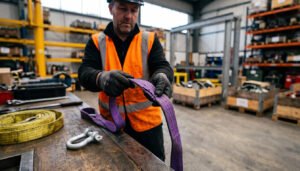
- Ancillary Gear: Fully certified beam clamps, lever hoists, slings, and shackles to complete your rigging setup.
Speed: The 1:00 PM Promise
In an industry where delays have cascading financial consequences, speed is a pillar of our service.
- 1:00 PM Cutoff: Equipment orders placed before the 1:00 PM cutoff are processed for next-day delivery nationwide, ensuring that a scope change today doesn’t stall the site tomorrow.
- Own Fleet Logistics: By utilising our own fleet, we maintain direct control over logistics, ensuring we are not dependent on third-party couriers to meet your deadlines.
- 99% On-Time Delivery: We have sustained this rate over three years across equipment hire, testing, and fabrication projects.
In lift installation, safety isn’t a marketing claim. It’s a result of deliberate investment in fleet, inventory, and engineering infrastructure. By combining LEEA-certified human expertise with a rapid-response infrastructure, Industrial Lifting Ltd ensures that your team has the right gear and the right support, every time.
Don’t let equipment delays risk your handover date.
Contact Industrial Lifting Ltd today to book your Chain Block Hire or to discuss your specific project requirements with our technical team.