
For any engineer arranging lift test weight hire, the regulations are the easy part. LOLER (the Lifting Operations and Lifting Equipment Regulations) tells you what to test, when to test it, and to what load. It doesn’t move 1,400kg of cast iron into a fifth-floor motor room for you.
That practical reality is the part of load testing nobody talks about. It’s also where most projects get held up. A delayed handover is rarely caused by a faulty calculation. It’s caused by weights arriving at the wrong end of the building, stillages that won’t fit through a goods lift door, or a Friday delivery slot that drifts into Monday.
At Industrial Lifting Ltd, we’ve built our test weight hire service around the physical job, not just the paperwork. As part of our wider range of lifting equipment supplies, we supply 20kg modular weights pre-loaded into 100kg stillages from our base in Stoke-on-Trent. They’re delivered by our own drivers on our own vans. And they’re sized to fit through the doors and into the lift cars they’re being used to test.
This guide explains how the system is built, why the 20kg unit size matters for site safety, and how our in-house logistics close the reliability gap that catches out general plant hire.
Why the 20kg Modular System Is Built for Site Reality
The choice of unit weight isn’t a packaging decision. It shapes everything from manual handling risk to how precisely you can hit a target Safe Working Load. Our system is built around 20kg individual weights for three deliberate reasons.
Manual Handling Compliance
A 20kg weight sits well within the HSE’s manual handling guideline figures for a single operative lifting at waist height. That’s not an accident.
Larger 50kg or 100kg blocks might look more efficient. On a real lift site, weights need to be carried through fire doors, around dog-legs, and over thresholds. Larger blocks create exactly the kind of awkward, twisting manoeuvres that cause back injuries and shoulder strains.
The 20kg unit means your engineers and our drivers can move weights individually. There’s no breach of site H&S rules and no need for a second pair of hands on every block. Your principal contractor’s HSE coordinator has nothing to flag during a site walk-around.
The 100kg Module: Stability Under Load
Each module in our test weight hire range is built from four 20kg weights pre-loaded into a 20kg stillage. That gives you 100kg of stable, secured test mass. The stillage isn’t just a carrier. It’s a purpose-built frame that holds the weights in fixed positions, so they don’t shift, rattle, or rebound during movement.
That stability matters more than it sounds. When a fully loaded module is raised inside a lift car during a static load test, you don’t want individual blocks shifting around. Loose blocks would change the car’s centre of gravity mid-test.
During dynamic testing, particularly buffer impact tests, loose weights would be a genuine safety hazard at the moment of impact. Pre-loaded stillages eliminate both risks.
Hitting the Right Number
The other practical advantage of 20kg weights is precision. Engineers can build a test load in small steps rather than being forced into 100kg jumps.
That matters when you’re matching specific lift capacities, whether that’s a 1,000kg passenger lift, a 630kg goods lift, or a non-standard SWL on a refurbished installation.
In practice, that means fewer compromises on test accuracy. There’s no need to “round up” with an extra full module just because the supplier’s blocks don’t divide neatly into your target weight.
In-House Logistics That Match the Pace of Your Site
The single biggest variable in any test weight hire isn’t the weights themselves. It’s whether they turn up at the right place, at the right time, in a state you can actually use. This is where general plant hire most often lets lift engineers down. We’ve made the deliberate choice to keep everything in-house.
Our Own Fleet, Our Own Drivers
Every test weight hire from Industrial Lifting Ltd is delivered in one of our own vans, by one of our own drivers. We don’t hand jobs over to third-party couriers, pallet networks, or sub-contracted hauliers.
That sounds like a small distinction. In practice, it changes everything. When a delivery runs on a national pallet network, your weights become one drop on a route of fifty. The driver doesn’t know what the load is or where it’s going inside the building. There’s no incentive to wait while you check the kit. Slots slip. Drivers leave gear at the gate. Pallets get refused at busy goods-in bays.
Keeping the fleet in-house changes that. Our drivers know they’re delivering to a live test. They understand the urgency. They’re directly accountable to us, not a logistics broker.
Point-of-Use Delivery
A general courier delivers to “site.” Our drivers deliver to the working area.
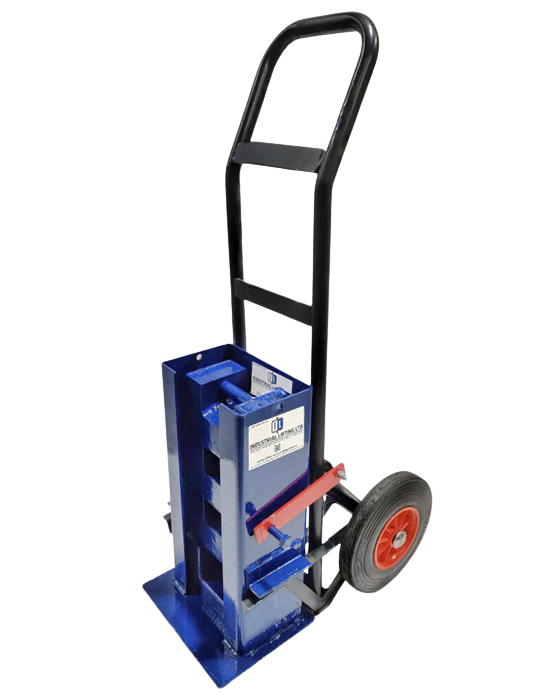
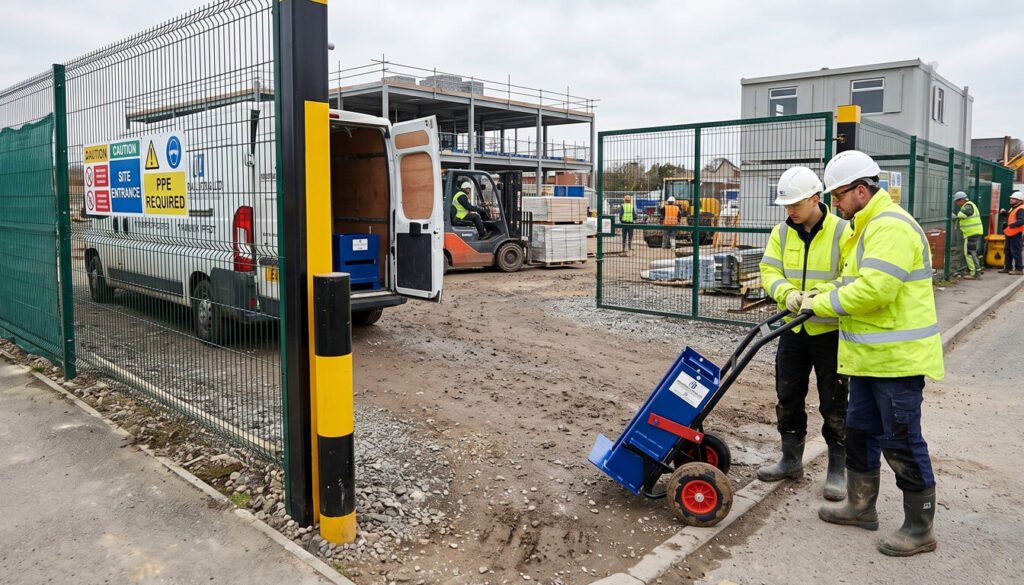
Where site access permits, we’ll position the weights as close to the lift entrance, motor room, or staging area as the building allows. We don’t just drop at the gate or leave your team to manhandle weights across a car park. That might mean reversing up to a goods-in door, using a lift lobby, or routing weights through a service corridor. Trolleys come with every hire to make this possible.
It’s a small piece of professionalism that saves your engineers thirty minutes of lifting and shifting before the actual test has even started.
Reliable Time Slots
Because we control the vehicle and the route, we can give you genuine time windows. That’s not the four-hour “AM/PM” guesswork you’ll get from a courier.
For lift engineers working to a handover deadline, that reliability matters. It’s the difference between completing a test on schedule and watching a half-day’s labour evaporate while everyone waits for a delivery. Orders placed before 1pm are dispatched for next-day delivery across the UK. Our drivers work to confirmed slots wherever the route allows.
Trusted by Lift Engineers Across the UK
The system, the fleet, and the drivers are only worth as much as the experience they create on site. Here’s what one of our regular clients had to say:
“Great team always willing to go the extra mile to help and assist and are very dependable.” — James, JC Services (Google review)
Repeat bookings from lift engineers, contractors, and facilities managers across the UK tell us we’re getting the small things right.
Built for the Tests That Trip Up General Plant Hire
A standard pallet of weights might cover a basic static load test. The jobs that actually catch out non-specialist suppliers are the ones with awkward access, high-impact loads, or tight working spaces. This is where the design of our 100kg modules earns its keep.
Buffer and Safety Gear Tests
Some of the most demanding work in a lift commissioning schedule is the dynamic testing involved in proof load testing. Buffer impact tests, overspeed governor trips, and safety gear tests are the checks that prove a lift’s safety systems will catch it if something goes wrong.
They all involve sudden stops or controlled drops. The test weights are pushed by forces well above their own weight.
A loose weight in that scenario isn’t just a nuisance. It’s a hazard.
Our 100kg modules are pre-loaded into stillages that hold every block in a fixed position. The weights stay put through the impact, the rebound, and the recovery. That gives the engineer running the test confidence in the result and confidence in the safety of everyone on the job.
MRL (Machine-Room-Less) Sites
Modern MRL installations are designed to save building space. That’s good for the architect and bad for whoever’s trying to get test weights into the lift car.
Narrower lift cars, lower headroom, and machinery mounted in the shaft itself all leave less room to work in. Off-the-shelf weight pallets often won’t fit through the car door, let alone leave room for an engineer to work alongside them.
Our stillages are sized with these constraints in mind. The footprint is compact enough to pass through standard MRL car doors, and the 100kg modules can be loaded one at a time as the test load builds up. There’s no need to dismantle a pallet on the landing or stage weights in a corridor while you wait for space.
Site Mobility
Forklifts and pallet trucks don’t fit through standard doorways. They don’t navigate dog-legs, fire door chicanes, or the lobby of a Victorian conversion. Once the weights are off the van, the only thing moving them is the kit you’ve brought with you.
Every test weight hire from Industrial Lifting Ltd includes a wheeled trolley designed to take the loaded stillage. The trolley fits through standard doorways, rolls over thresholds, and turns in tight corridors. Two operatives can move a 100kg module from the loading bay to the lift car without lifting it once.
That’s not a luxury. On a multi-floor site with restricted access, it’s the difference between completing the test before lunch and losing the day to manual handling.