

Introduction
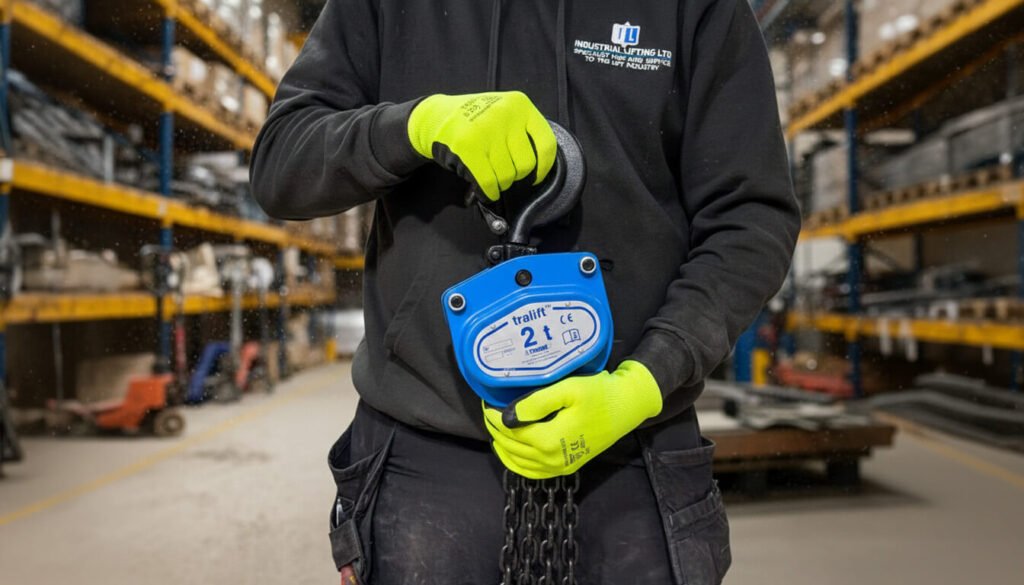
What is a chain block? A chain block, also called a chain hoist or manual chain hoist, is a manual lifting device. It uses a hand chain, a load chain and a system of internal gears to lift heavy loads vertically. You will find chain blocks on UK construction sites, in lift shafts, in plant rooms and across marine and theatre rigging projects.
This guide explains how a chain block works, what its main parts are, what the SWL means and what UK law requires of every chain block in service.
How a Chain Block Works
A chain block has three key working parts. The chains. The gearbox. And the brake. Each does a specific job.
The Three Chains
A chain block uses three chains in service. The hand chain is the lighter loop the operator pulls. It runs through a wheel on the side of the unit. The load chain is the heavy-duty chain that lifts the load. It is hardened steel and rated to the full capacity of the block. The free chain is the loose end of the load chain. It hangs below the unit when the block is unloaded. As the load rises, the free chain feeds back through the casing.
The Gear Reduction
Inside the casing sits a small gearbox. The hand chain turns a large gear. That large gear drives a much smaller one connected to the load chain. The ratio is what makes a chain block useful.
A typical 1 tonne chain block has a gear ratio of around 40 to 1. Pulling 40 metres of hand chain raises the load by 1 metre. The operator trades speed for force. A small effort moves a heavy load.
The Pawl and Ratchet Brake
The brake holds the load in place when the operator stops pulling. A spring-loaded pawl drops into a toothed ratchet wheel. The wheel can only turn one way under load. When the operator stops pulling, the pawl locks the system.
To lower the load, the operator pulls the hand chain in the opposite direction. This disengages the pawl in a controlled way. The load lowers slowly and safely.
The Anatomy of a Chain Block
What is a chain block made up of? Every chain block, regardless of capacity, shares the same core parts. The diagram below shows each one in position.
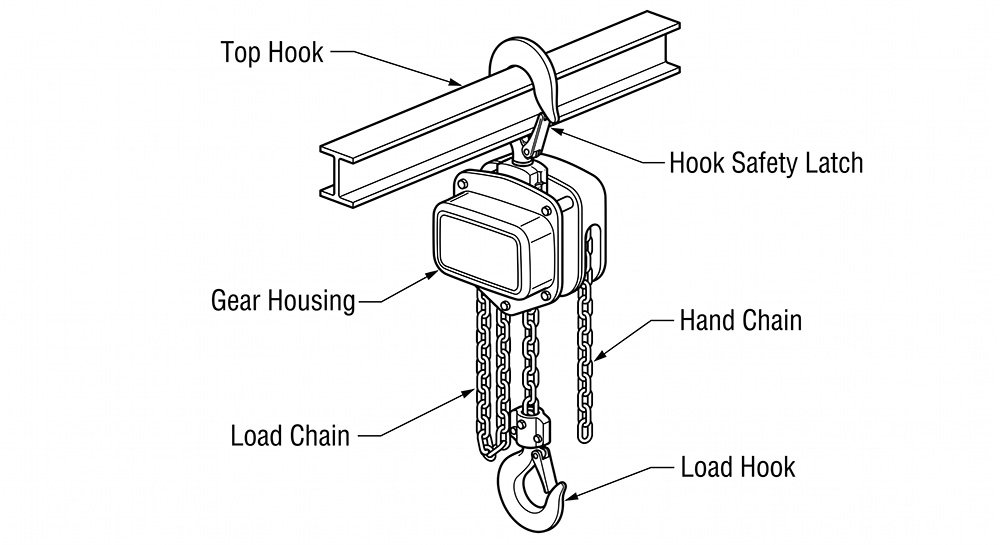
- Top hook (suspension hook): Fixed to the top of the unit. Used to attach the chain block to a beam, gantry or rated anchor point. Always fitted with a safety latch.
- Load hook: Hangs from the bottom of the load chain. Attaches to the load via a sling or shackle. Also fitted with a safety latch.
- Hand chain: The light chain loop the operator pulls.
- Load chain: The heavy-duty hardened steel chain that lifts the load.
- Gear housing: The steel casing that protects the internal gearbox and brake.
- Pawl: The spring-loaded mechanical part that locks the brake when the operator stops pulling.
- Hook latches: Spring-loaded gates on both hooks. Stop slings or shackles slipping off under load.
Knowing the parts is the first step. Spotting when they wear is the next. Our chain block inspection guide covers the five faults that fail a LOLER check.
Chain Grades and SWL Explained
What is a chain block rated to lift? The answer comes down to two terms. The Working Load Limit (WLL) and the Safe Working Load (SWL).
WLL and SWL Explained. The WLL is the manufacturer’s tested limit. It is stamped on the unit itself. The SWL is the working limit applied on site after risk assessment. In most cases the two numbers match.
Capacity Range. Manual chain blocks are made from 250kg right up to 50 tonnes. Smaller capacities are common for rigging and secondary steelwork. Larger units handle structural lifts and heavy machinery installation. Industrial Lifting Ltd’s chain block hire fleet covers the most common UK working range.
Grade 80 vs Grade 100. Most modern chain blocks use Grade 80 or Grade 100 load chain. Grade 80 is the long-standing industry standard. Grade 100 is around 25% stronger for the same chain diameter. Both grades are LOLER compliant when properly inspected and certified.
Common Applications for Chain Blocks
So what is a chain block typically used for? Almost any vertical lift in a confined space, or where power is not available.
Lift shafts. Used for motor and counterweight positioning during lift installation and service work. The depth of shafts and lack of power often rule out other options.
Plant rooms. Pump removals, motor swaps, and HVAC equipment lifts. Tight headroom is common, which suits a chain block’s compact size.
Construction steelwork. Secondary steel positioning and bolt-up lifts in places where a mobile crane cannot reach.
Marine and dock work. Rigging on board ships and in shipyard sheds. Rated chain blocks handle the weights involved in marine machinery.
Theatre and event rigging. Lighting trusses, scenery, and overhead loads in fly towers and venue grids.
Confined spaces. Tunnels, basements, and underground plant. A chain block fits where larger powered equipment cannot.
Not sure whether a chain block or a lever hoist is right for your project? Read our chain block vs lever hoist guide.
Chain Block Compliance: LOLER, LEEA and BS EN 13157
What is a chain block required to comply with on a UK site? Three pieces of regulation and standards apply. LOLER 1998, BS EN 13157, and LEEA accreditation. Each plays a different role.
LOLER 1998. The Lifting Operations and Lifting Equipment Regulations 1998 are UK law. They apply to any lifting equipment used at work. For chain blocks, the key duties are clear. Equipment must be fit for purpose. Operators must be competent. A thorough LOLER examination must take place every 12 months. Records of those examinations must be kept and made available on request.
BS EN 13157. This is the British and European standard for hand-operated lifting equipment. It sets the design, construction and testing requirements for chain blocks. These apply to all units sold and used in the UK. Reputable manufacturers stamp the standard on the unit alongside the SWL.
LEEA. The Lifting Equipment Engineers Association is the recognised trade body for lifting professionals in the UK. LEEA accreditation signals that a supplier’s engineers are trained to industry standard. It also confirms they are competent to carry out thorough examinations.