Introduction
Who can carry out a LOLER inspection? The answer is a competent person. That is the term the regulations use, and it is not a job title anyone can simply claim.
A competent person has the practical and theoretical knowledge of the equipment, plus enough experience to spot faults and judge whether the equipment is safe to use. They must also be independent enough to give an honest verdict, free from pressure and free from any interest in the outcome.
This is a legal requirement, not a preference. Under LOLER, a thorough examination must be carried out by a competent person. A duty holder who lets the wrong person do it still carries the responsibility.
The rest of this guide explains what competence actually means, whether you can do it in-house, and why independence matters more than most people expect.
What is a Competent Person Under LOLER?
A competent person is someone with the knowledge and experience to examine lifting equipment and judge whether it is safe to use. LOLER requires the thorough examination to be carried out by that person. It does not allow anyone else to do it.
There is no single certificate that makes someone a competent person. The HSE’s guidance on competent persons describes it as a matter of practical and theoretical knowledge and experience, not a licence. This surprises people.
There is no licence to apply for and no register to join. Competence is judged on what the person actually knows and has done.
In practice, a competent person needs three things.
- Practical knowledge of the type of equipment being examined.
- Theoretical knowledge of how it works, how it fails, and what the standards require.
- Enough experience to spot a developing fault before it becomes a failure.
They also need the independence to report honestly. A competent person must be free to say the equipment has failed, without pressure from anyone who would rather hear otherwise.
Once the examination is complete, the competent person issues the certificate that records it.
Can I Carry out a LOLER Inspection Myself?
In most cases, no. A duty holder cannot simply decide to carry out their own thorough examination. The person doing it must meet the competent person standard, and most businesses do not have someone in house who does.
The confusion usually comes from mixing up two different checks.
A pre-use check is the quick look an operator gives the equipment before lifting. Chain running freely. No obvious damage. Hook and latch in one piece. This happens daily or before each shift, and the operator does it themselves.
A thorough examination is different. It is a detailed, systematic examination carried out by a competent person at set intervals, and it produces a formal written report. It is not a visual once over.
Doing your pre-use checks well is essential. It is also not a substitute for the thorough examination. If you are unclear on the difference, what a LOLER inspection actually involves sets out the process.
There is one more thing to be clear about. Even where a business does have someone with the right knowledge, that person still needs to be independent of the work being examined. That is where in house examination usually falls down, and it is the subject of the next section.
Why Independence Matters
A competent person needs to be independent of the equipment they are examining. That means independent of the people who maintain it, repair it and operate it.
The reason is simple. If someone examines their own repair work, they are marking their own homework. They may be entirely honest and still miss something, because they already believe the job was done properly. That is human, and it is exactly what an independent examination is there to catch.
There is a commercial pressure too. An in house engineer who fails a critical piece of equipment has just stopped production and created work for their own department. That is an uncomfortable position to put someone in. An independent examiner has no such conflict. They report what they find.
This is why most businesses use an outside company for their thorough examinations. It removes the conflict of interest, and it produces a record that stands up if anyone questions it later. If the HSE or an insurer asks who examined the equipment and on what basis, an independent report is a far stronger answer than an internal one.
Independence is not the only requirement. A competent person still needs the knowledge and experience to do the job properly. But without independence, the rest counts for less than it should.
What Training and Experience Does a Competent Person Need?
There is no single qualification that makes someone a competent person. What matters is the combination of training, knowledge and time spent doing the work.
A competent person should have formal training in the examination of lifting equipment. Industry training through bodies such as LEEA is the usual route. That training covers the standards, the examination process, and what to look for on each type of equipment.
Training alone is not enough. Experience is what turns knowledge into judgement. A competent person needs to have seen equipment in service, seen how it wears, and seen how it fails. That is what allows them to spot a fault that is developing rather than one that has already happened.
Competence is Specific to the Equipment
This is the part people miss. Being competent to examine one type of lifting equipment does not make someone competent to examine everything.
A person who examines chain blocks all day is not automatically qualified to examine a passenger lift, a vehicle tail lift or a runway beam. Each type has its own failure modes and its own standards. The competent person must be competent for the equipment in front of them.
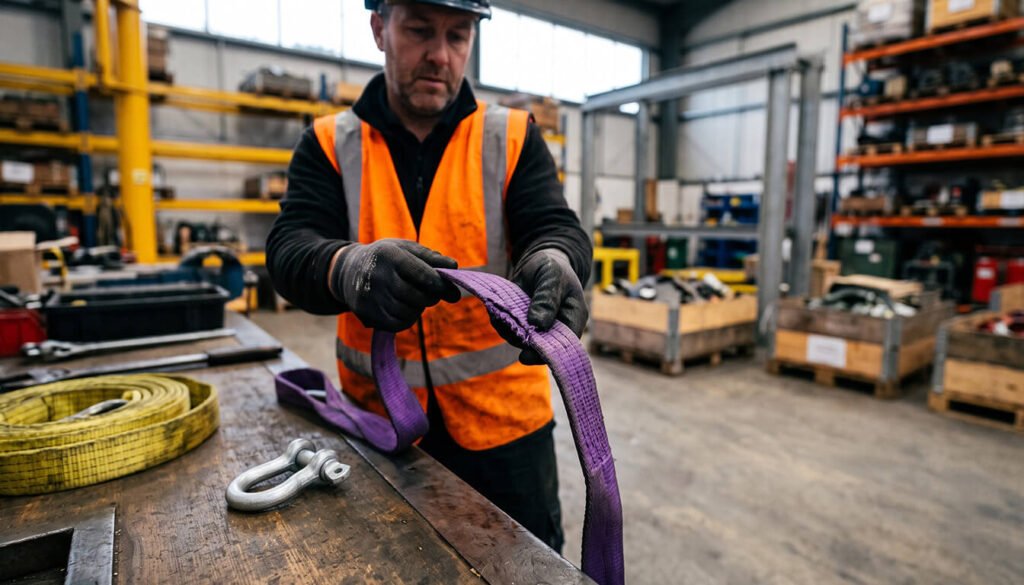
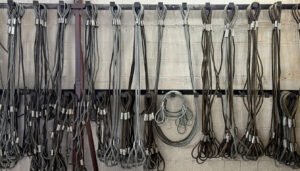
The same applies to accessories. Slings, shackles and hooks have their own examination requirements and their own six month inspection cycle, and they need someone who knows what wear looks like on webbing and on steel.
When you appoint someone to examine your equipment, it is worth asking what they are competent to examine. A good provider will tell you straight.
Why it Matters for the Duty Holder
The duty holder carries the responsibility for making sure the thorough examination is done properly. Not the examiner. The duty holder.
That is worth sitting with for a moment. If the examination was carried out by someone who did not meet the competent person standard, the duty holder has not met their obligation under LOLER. The paperwork may exist. It may look perfectly convincing. It still does not cover you if the person who produced it was not competent to do so.
This becomes real in three situations.
- An HSE inspection. If an inspector asks who examined the equipment and on what basis, you need a clear answer. “Our maintenance engineer had a look” is not one.
- An insurance claim. After an incident, an insurer will want to see the examination history and who produced it. Gaps and unqualified examinations are where claims get difficult.
- An accident. If someone is hurt by equipment that should have been examined properly, the duty holder is the one answering for it.
So the question is not just whether the examination happened. It is whether the right person did it, and whether you can show that.
If a piece of equipment is failed at examination, the duty holder is also responsible for what happens next. Our guide on what happens when a LOLER inspection fails covers those steps.
Where to Get a Competent LOLER Inspection
If you need a thorough examination, the practical route is to use a company that provides competent examiners as its core business.
An external provider gives you the independence the examination needs. They have no involvement in maintaining or operating your equipment, so there is no conflict in the verdict. They also carry the training and experience across a range of equipment types, rather than one narrow area.
When you are choosing a provider, it is fair to ask a few questions.
- What types of lifting equipment are your examiners competent to examine?
- What training do they hold?
- Will the report set out clearly what was found and when the next examination is due?
Any competent provider will answer all three without hesitating.
Industrial Lifting Ltd carries out LOLER testing and thorough examinations across lifting equipment and accessories. Our examiners are independent of your maintenance and operations, and the report you receive sets out exactly what was examined, what was found, and when the next examination falls due.
Who Can Carry out a LOLER Inspection: Frequently Asked Questions
Can I carry out my own LOLER inspection?
In most cases, no. A thorough examination must be carried out by a competent person with the right training, knowledge and experience, who is independent of the maintenance and operation of the equipment. Daily pre-use checks by an operator are a separate requirement and do not replace the thorough examination.
Does a competent person need a specific qualification?
There is no single licence or certificate that makes someone a competent person. Formal training through a recognised industry body is expected, but it must be backed by real experience of the equipment being examined. Competence is judged on knowledge and experience together, not on one document.
Can my maintenance engineer carry out the thorough examination?
Usually not. Even if the engineer has the technical knowledge, they are not independent of the work they maintain. Examining your own repairs creates a conflict of interest, which is why most businesses use an external examiner.
What happens if an unqualified person carries out a LOLER inspection?
The examination does not meet the requirements of LOLER, so the duty holder has not discharged their obligation. The report may exist on paper but it offers no protection in an HSE inspection, an insurance claim or after an accident.
Is a competent person qualified to examine all lifting equipment?
No. Competence is specific to the type of equipment. Someone competent to examine chain blocks is not automatically competent to examine passenger lifts, tail lifts or lifting accessories. Always check what a provider’s examiners are competent to examine.
Get the Right Person on the Job
A thorough examination is only worth having if the right person carried it out. The paperwork does not protect you. The competence behind it does.
If you are not certain whether your examinations are being done by someone who meets the competent person standard, it is worth checking. Ask who examined the equipment, what they are qualified to examine, and whether they are independent of the people who maintain it.
Industrial Lifting Ltd provides thorough examinations carried out by competent, independent examiners across a full range of lifting equipment and accessories. We tell you what we are competent to examine, we report exactly what we find, and we give you a clear date for the next examination.
Get in touch and we will get your equipment booked in.