
Introduction
LOLER and PUWER are the two pieces of UK law that govern work equipment and lifting. PUWER applies to all equipment used at work, from a drill press to a fork-lift. LOLER is a tighter set of rules that sits on top, applying specifically to anything used for lifting and to the accessories that go with it.
Both are legal duties. Neither replaces the other. Most lifting kit on a site is covered by both at the same time, in different ways. Confusing the two, or assuming one is enough on its own, is one of the most common compliance mistakes the HSE picks up.
This guide explains what each regulation is, where they overlap, and which rules apply to which equipment. Plain English throughout, with real examples so you can place your own kit against the right rule.
What is PUWER?
PUWER stands for the Provision and Use of Work Equipment Regulations 1998. It is one of the broadest pieces of workplace safety law in the UK. If you use it at work, PUWER almost certainly applies to it.
The scope is wide on purpose. PUWER covers any equipment used by a worker, from a hand drill on a building site, to a band saw in a workshop, to a fork-lift in a warehouse, to the kettle in the office kitchen. If an employee uses it to do their job, PUWER is in play.
The regulations have four main requirements:
Suitability. Equipment must be suitable for the job, the user and the working environment.
Maintenance. Equipment must be kept in good working order and properly maintained.
Training. Anyone using the equipment must be trained, informed and competent for the task.
Safe use. The way the equipment is used must be safe, with proper controls, guards and procedures.
PUWER puts the duty on employers and on self-employed people responsible for the equipment. Day-to-day compliance with PUWER tends to look like risk assessments, maintenance schedules, operator training records and routine pre-use checks.
PUWER applies to a much wider range of equipment than LOLER. So every piece of lifting equipment is covered by PUWER. But not every piece of PUWER equipment is covered by LOLER.
What is LOLER?
LOLER stands for the Lifting Operations and Lifting Equipment Regulations 1998. It is a tighter set of rules that applies specifically to any work equipment used to lift or lower loads, and to the accessories that go with it.
Where PUWER covers all work equipment, LOLER covers just the lifting side. Chain blocks, lever hoists, electric hoists, beam clamps, cranes, passenger lifts, fork-lifts when they are lifting, and the slings, shackles, eyebolts and hooks that connect to the load. All of these fall under LOLER, in addition to PUWER.
LOLER has four core requirements:
Strong and stable. Lifting equipment must be strong and stable enough for each load, with the safe working load clearly marked.
Properly planned. Every lifting operation must be planned by a competent person, properly supervised and carried out safely.
Thorough examination. Lifting equipment must be thoroughly examined by a competent person at set intervals, with a written report kept on file.
Records and certificates. The reports of thorough examination must be kept, traceable to the specific piece of equipment they refer to.
The examination intervals are the part most people end up dealing with. Lifting equipment used for lifting loads is examined at least every 12 months. Lifting accessories such as slings, shackles and hooks, and any equipment used to lift people, are examined at least every 6 months. We have covered this in more detail in our guide to LOLER inspection for lifting accessories and our LOLER inspection frequency guide.
So PUWER says the equipment must be safe and the people using it must be trained. LOLER goes further and says, for lifting kit, here is exactly how it must be inspected, by whom, and how often.
The Key Differences Between LOLER and PUWER
The easiest way to see where LOLER and PUWER diverge is side by side.
PUWER | LOLER | |
What it covers | All work equipment, from hand tools to fork-lifts | Lifting equipment and lifting accessories only |
Examples | Drills, saws, ladders, mixers, fork-lifts, lift trucks | Chain blocks, hoists, cranes, slings, shackles, eyebolts |
What it requires | Suitable kit, maintained, with trained users and safe use | Strong and stable kit, planned lifts, thorough examination, records |
Inspection rules | General duty to maintain in safe condition | Set intervals: 12 months for lifting equipment, 6 months for accessories and people-lifting |
Who can inspect | A competent person, scope set by risk | A competent person to a defined standard, independent of day-to-day use |
Paperwork | Maintenance records, training records, risk assessments | Report of Thorough Examination kept and traceable to each item |
Year introduced | 1998 | 1998 |
The pattern to take away from this is simple. PUWER is the wider rule covering everything. LOLER is a tighter rule that applies on top of PUWER, but only for lifting kit. If a piece of equipment lifts a load, both regulations apply at the same time.
Where the Two Overlap
This is the part that catches most people out. A single piece of lifting equipment is almost always covered by both regulations at the same time, just in different ways.
PUWER governs the everyday side of the equipment. Is it suitable for the job? Is it being maintained properly? Are the people using it trained and competent? Is it being used safely on the day? PUWER covers the kit and the people across its whole working life.
LOLER governs the lifting-specific side. Has the equipment been thoroughly examined within the right interval? Is there a current Report of Thorough Examination on file? Is the safe working load marked? Was the lift planned by a competent person?
So both regulations apply to the same item, but they look at different parts of it.
A fork-lift truck is the cleanest example. PUWER covers the brakes, the steering, the lights, the seatbelt, the daily walk-around check and the driver’s training. LOLER covers the mast, the forks, the lifting chains and the thorough examination that keeps the lifting function compliant. One machine, two regulations, two sets of paperwork. Miss either side and you have a compliance problem, even if the other side is perfect.
The same logic runs through a chain block. PUWER covers the suitability of the block for the job, the condition it is in day to day, and the training of the person using it. LOLER covers the 12 monthly thorough examination, the SWL marking and the certificate. The pre-use check we covered in our chain block inspection guide sits under PUWER. The formal LOLER inspection is the other half of the picture.
The takeaway. If a piece of equipment lifts a load, assume both regulations apply, and deal with each one separately. Treating them as a single duty is what creates the gaps that audits find.
Practical Examples
The easiest way to test your own kit is to run through real examples. Here are five common pieces of equipment and which regulations apply to each.
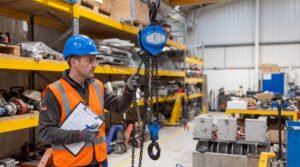
Chain block: LOLER and PUWER
The chain block itself is a piece of lifting equipment, so it falls under LOLER on a 12 monthly thorough examination. The chain sling, shackle or hook attached underneath is a separate lifting accessory, so it falls under LOLER too, but on the 6 monthly cycle. PUWER covers the suitability of the block for the job, its general condition and the training of the operator.
Drill press: PUWER only
A drill press is work equipment, but it does not lift loads. It sits under PUWER alone. That means a maintenance regime, operator training and a safe place to use it, but no LOLER thorough examination is required.
Passenger lift: LOLER and PUWER
A passenger lift is equipment used to lift people, so LOLER applies on the shorter 6 month thorough examination cycle. PUWER also applies, covering the day-to-day safe operation, the controls, the emergency systems and the maintenance schedule.
Fork-lift truck: LOLER and PUWER
A fork-lift is the example most people miss. The whole machine is PUWER. The lifting function, including the forks, the mast and the lifting chains, is LOLER on the 12 month thorough examination cycle. Same machine, both regulations, different parts of the inspection.
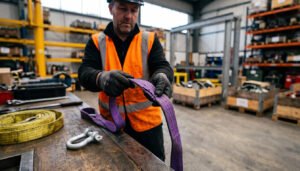
Webbing sling: LOLER and PUWER
A sling on its own is a lifting accessory. LOLER applies on the 6 month thorough examination. PUWER applies too, covering its suitability for the load, the user’s training and its general condition before each use.
Run through your own kit the same way. If it does not lift, you are in PUWER territory only. If it does lift, you are dealing with both, and the LOLER side has the firmer rules around frequency, records and competent inspection.
Who is Responsible?
The legal duty under both LOLER and PUWER sits with the employer or self-employed person who has control of the equipment. That is the duty holder.
In practice the duty holder is usually the business that owns the kit. But there are common situations where it shifts.
Hired equipment. When kit is hired, the hire company is responsible for supplying it in a safe and compliant condition, with a current thorough examination report. The hirer is then the duty holder for the period it is on their site, responsible for safe use, suitable training and any examinations that fall due during the hire.
Contracted operations. When a lifting operation is contracted out, the contractor is normally the duty holder for the lift itself. The site they work on still has its own duties under PUWER for the wider environment.
Shared sites. On multi-employer sites, the duties can be split between several parties. The principal contractor usually carries overall responsibility, with each employer responsible for their own people and their own equipment.
For LOLER specifically, the thorough examination has to be carried out by a competent person. That is someone with the practical and theoretical knowledge, the experience and the independence to spot defects and judge whether the equipment is safe to stay in service. In practice this is usually a LEEA-certified examiner or equivalent, working independently of the day-to-day use of the kit. The competent person is also a defined role under PUWER, with similar but broader requirements.
The penalties for getting it wrong are real. The HSE can issue improvement and prohibition notices, and serious breaches can lead to prosecution and unlimited fines. More commonly, a missed examination shows up at audit, the kit is grounded, the job stops, and the duty holder is left explaining the gap.