

Introduction
A chain block inspection is an easy job to rush. The block looks fine. It lifted the last load without a problem. So it goes straight back to work. Then it fails a LOLER inspection, often at the worst possible moment.
A failure mid-project costs you. The job stops. The lift is delayed. Someone has to chase down a replacement at short notice.
The good news is that most failures are easy to catch early. You do not need to be a qualified examiner to spot them. A quick look before each lift will flag most problems long before they become a formal fail. If you are not sure what you are looking at, our engineer’s guide to chain blocks runs through the parts.
This guide covers the five faults that most often cause a chain block to fail. For each one, we explain why it fails and how to spot it during a normal pre-use check. Whether you do the lifting or you carry the compliance, these are the things to watch for.
Why Chain Block Inspection Matters
A chain block inspection is not a one-off job. It happens at two levels.
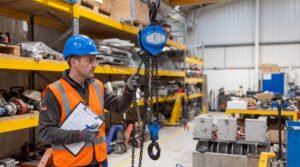
The first is the pre-use check. This is the quick look the operator gives the block before each lift. It takes a minute. It catches the obvious faults before the load goes on.
The second is the thorough examination. This is the formal LOLER testing carried out by a competent person. Under LOLER, lifting equipment like a chain block must have one at least every 12 months. The examiner checks the block in detail and issues a report.
Both matter, and they work together. The thorough examination is your legal backstop. The pre-use check is what keeps the block safe in between. A fault caught early in a pre-use check never gets the chance to fail the formal one.
That is the point of this guide. The five faults below are exactly what both checks look for. Spot them early and you keep your equipment working and your paperwork clean.
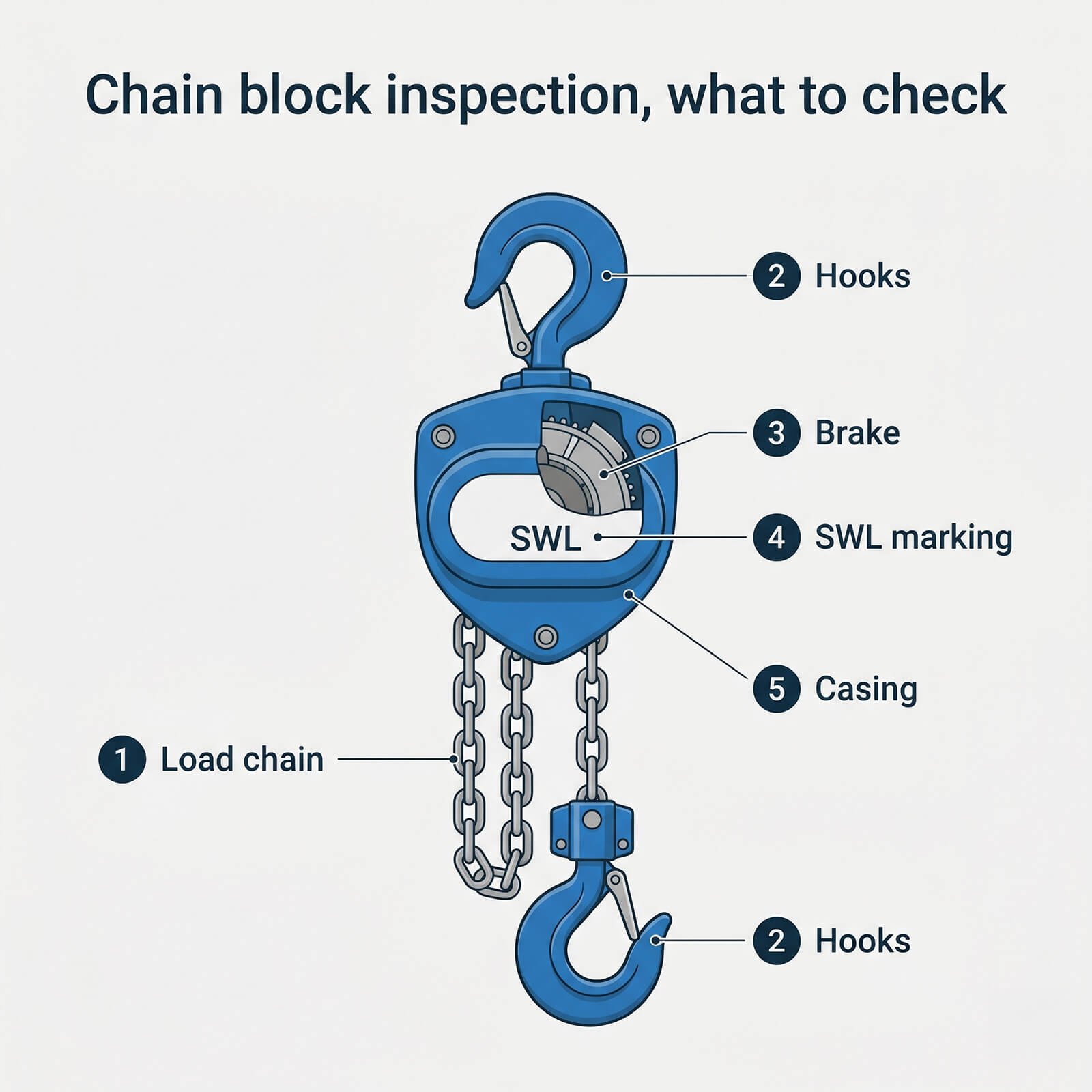
Failure 1: A Worn or Stretched Load Chain
The load chain is the part that does the heavy lifting. It carries the full weight of the load, link by link. So it is the first thing any chain block inspection looks at closely.
Over time, a load chain stretches. The links wear where they rub against each other. Lift after lift, the metal thins. A chain that has been overloaded stretches faster still. Rust, nicks and gouges all weaken it further.
This is a hard fail, for one simple reason. The load chain is load-bearing. If it is worn or stretched, it can break under load. An examiner will reject any chain that is stretched past the maker’s limit, badly worn, gouged or corroded.
You can catch most of this early. Before a lift, run the chain through a gloved hand and look along its full length. Watch for:
- Links that look longer or thinner than the rest
- Nicks, gouges or flat worn patches
- Rust or pitting
- Links that have twisted or jumped out of line
- A chain that feels rough or notchy as it runs through the block
If anything looks off, do not lift with it. Your examiner measures chain stretch precisely. Your eyes and hands will catch the obvious problems long before then.
Failure 2: Hook Damage or a Missing Safety Latch
Every chain block has two hooks. The top hook holds the block in place. The bottom hook takes the load. A chain block inspection checks both.
Hooks take a lot of strain. Over time, and especially after an overload, a hook can start to open up. The gap, or throat, widens. That is a clear warning sign. A hook can also wear thin where the sling sits, crack near the throat, or twist out of shape.
Then there is the safety latch. This is the small sprung catch across the hook opening. Its job is to stop the sling jumping off the hook. If the latch is missing, bent or will not spring shut, the block can fail on that alone.
Here is why it matters. A hook that has opened up can let the load slip free. A latch that does not close can do the same. Either one puts the load, and anyone near it, at risk.
Before a lift, check both hooks. Watch for:
- A throat that looks wider than it should
- A safety latch that is missing, bent or will not snap shut
- Cracks, especially around the throat
- Wear or thinning where the sling seats
- A hook that is bent or twisted out of line
If a hook looks opened up or a latch will not close, take the block out of use.
Failure 3: A brake That Does Not Hold
The brake is what holds the load in place when the operator stops pulling. Lift a load, let go of the hand chain, and the brake should hold it exactly where it is. If it does not, the load can drop. This is the most dangerous fault of the five.
Brakes fail for a few reasons. The braking surfaces wear down over time. Oil or grease can get onto them and stop them gripping. The parts that lock the brake can wear or stick. When that happens, the load starts to creep, slip or drop in steps.
A chain block inspection always tests the brake, because the risk is so high. An examiner will fail any block where the brake does not hold cleanly.
You can test this yourself before a job. Lift the load just clear of the ground. Stop. Let go of the hand chain. The load should not move at all. Watch for:
- The load creeping or sinking after you let go
- The load dropping in small steps instead of holding
- A hand chain that feels loose or spins without biting
- Juddering or slipping as you lower a load
Never stand under a raised load while you test. If the brake does not hold the load still, take the block out of use straight away.
Failure 4: Missing or Unreadable SWL Marking, or No Current Certificate
Not every failure is mechanical. This one catches people out, because the block can be in perfect working order and still fail.
Every chain block must clearly show its safe working load, or SWL. This is the most it is rated to lift. If that marking is missing, worn away, painted over or simply unreadable, the operator has no way to know the safe limit. That is a fail.
The block also needs its paperwork. Under LOLER, it must have a current report from its last thorough examination, dated within the last 12 months. It should carry an ID mark that matches that report. No current certificate means the block cannot be used, however good it looks.
This is the part of a chain block inspection that sits with the manager or duty holder. The risk here is yours, not the operators.
Before the block goes out, check:
- The SWL is marked on the block and easy to read
- There is an ID number on the block
- A current examination report exists, dated within the last 12 months
- The report matches the ID on the block
- Hired or shared kit arrived with its certificate
If the marking is gone or the paperwork is out of date, the block does not go to work.
Failure 5: A Cracked Casing or a Seized Mechanism
The casing is the body of the block. It holds the gears and the brake, and it keeps them lined up. If the casing is cracked, dented or twisted, those parts can move out of line. That can lead to a jam or a slip under load.
Inside, the mechanism should run smoothly. If it feels stiff, rough or jammed, something is wrong. The cause might be wear, rust, dirt, or a lack of grease. A block that has been dropped or knocked about often shows it here.
A chain block inspection should always include a quick run with no load on the hook. The block should raise and lower cleanly, with no grinding or sticking.
To check it yourself, operate the block empty before the job. Watch for:
- Cracks, dents or twists in the body
- A hand chain that is stiff, jerky or hard to pull
- Grinding, knocking or crunching sounds
- The mechanism jamming or skipping
- A hand chain that is damaged or does not feed smoothly
A block that runs rough when empty will not get better under load. If the body is cracked or the mechanism sticks, take it out of use.
What to do if Your Chain Block Fails
If a chain block inspection turns up any of these faults, the rule is simple. Stop using the block.
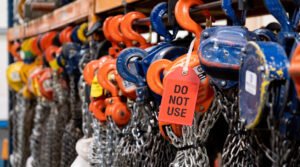
Take it out of service straight away. Tag it or set it aside so no one picks it up by mistake. Do not try to patch it up for one more lift. A block that has failed once is not safe to gamble on.
From there, you have two options.
The first is repair and re-test. Some faults can be put right by a competent person. The block must then be re-examined before it goes back to work. Others, like a worn load chain or a cracked body, usually mean the block has reached the end of its life.
The second is to replace it. Most jobs cannot wait days for a repair. This is where chain block hire keeps you moving. A hired block arrives tested, certified and ready to lift, so the work carries on and your paperwork stays in order.
Either way, the failed block stays out of use until it is sorted. A short delay now is far cheaper than a dropped load later.