

Introduction
Chain block vs lever hoist. Two of the most common manual lifting tools on UK sites. The choice between them often comes down to the direction of the lift. A chain block is built for vertical lifts only. A lever hoist can pull in any direction. Both are manual. Both are LOLER tested. But each has a clear job.
What is a Chain Block?
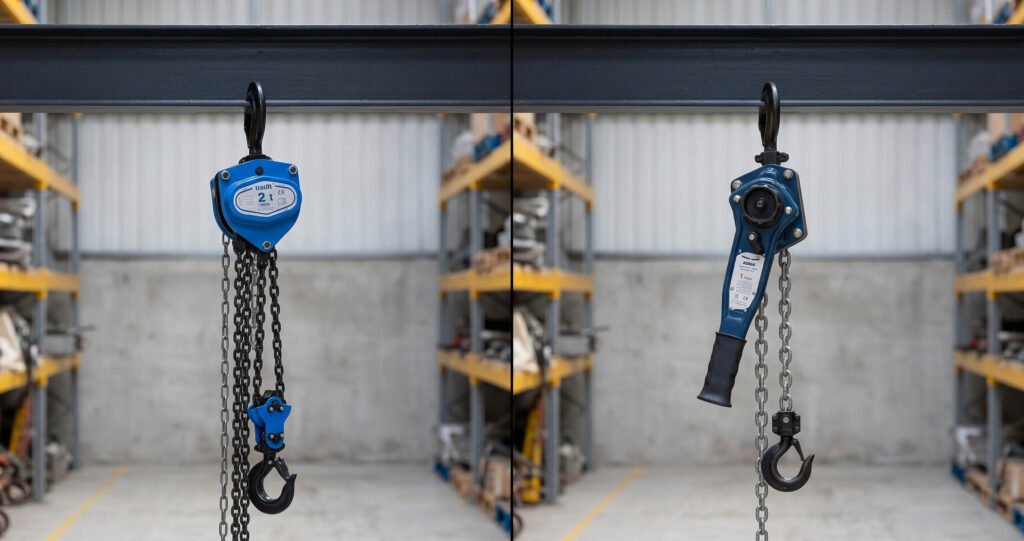
A chain block is a manual lifting device used for vertical lifts. The operator pulls a hand chain. A system of internal gears multiplies the effort. The load is lifted by a heavy-duty load chain attached to a hook.
A built-in pawl and ratchet brake holds the load in place when the operator stops pulling. Chain blocks come in capacities from 250kg up to 50 tonnes.
This vertical-only design is the first key difference in the chain block vs lever hoist comparison. For a deeper look at how chain blocks work, see our engineer’s guide to chain blocks.
What is a Lever Hoist?
A lever hoist is a manual lifting tool operated by a hand-pumped lever instead of a hand chain. Each stroke of the lever moves the load chain a small distance. A built-in ratchet mechanism stops the chain slipping back under load.
The big difference from a chain block is direction. A lever hoist can be used vertically, horizontally, or at any angle in between. That makes it useful for pulling, tensioning, and lifting loads in tight or awkward spots.
Lever hoists are also called pull lifts or come-alongs. The “pull lift” name comes from the tool’s ability to pull a load horizontally, not just lift one vertically. UK capacities typically range from 250kg up to 9 tonnes.
Chain Block vs Lever Hoist at a Glance
For a quick chain block vs lever hoist comparison, here are the key differences side by side.
Feature | Chain Block | Lever Hoist |
Operation | Pulling a loop of hand chain | Pumping a hand-operated lever |
Direction of lift | Vertical only | Vertical, horizontal, or any angle |
Typical capacity range (UK) | 250kg to 50 tonnes | 250kg to 9 tonnes |
Best for | High-reach vertical lifts | Multi-directional pulling and tensioning |
Common alternative names | Chain hoist, manual chain hoist | Pull lift, come-along |
LOLER compliance | Required every 12 months | Required every 12 months |
BS EN 13157 standard | Yes | Yes |
The simplest way to choose between them is direction of lift. If your project needs the load to move in a single straight line up or down, a chain block is the right tool. If you need to pull, tension or lift at an angle, a lever hoist is built for that job.
When to Choose a Chain Block
A chain block is the right tool when the lift is vertical and the load is heavy or needs to be moved a long way upward.
Pick a chain block for:
- Lifts above 9 tonnes. Lever hoists rarely exceed this capacity. For heavier machinery or structural lifts, a chain block is the only manual option.
- Long vertical Heights of Lift. Deep lift shafts, multi-storey rises, or jobs needing more than a few metres of vertical movement. Chain blocks come with extended chain lengths.
- Sustained suspended loads. When you need to hold a motor or component in place, the pawl and ratchet brake holds the load steady for as long as needed. Whichever you choose, it must pass a LOLER check. See the five faults that fail a chain block inspection.
- Standardised vertical workflows. Lift installation, plant room maintenance, and machinery removal where the lift is always vertical and the team works to the same method.
For the full hire range with various Heights of Lift, see our chain block hire fleet.
When to Choose a Lever Hoist
A lever hoist is the right tool when the pull is not purely vertical, or when the load needs to be tensioned, positioned, or angled into place.
Pick a lever hoist for:
- Horizontal pulling and tensioning. Cable tensioning, guy wire adjustment, structural pulling, or any job where the force needs to move sideways instead of up.
- Angled lifts. When the load needs to be pulled at an angle that a chain block cannot safely handle. Lever hoists are rated for non-vertical work.
- Tight or awkward spaces. The compact lever action works in tight corners, on scaffolding, on flatbed trailers, and in places where a hand chain loop is hard to manage.
- Securing and positioning. Lashing loads down, holding components in position during installation, or nudging a piece of plant into the final spot.
For the full hire range, see our lever hoist hire fleet.
Capacity, Versatility and Compliance Considerations
Capacity. Chain blocks scale higher than lever hoists. Manual chain blocks are made from 250kg right up to 50 tonnes. Lever hoists usually top out around 9 tonnes. For lifts above 9 tonnes, a chain block is the only manual choice.
Versatility. Chain blocks lift vertically only. Lever hoists handle vertical, horizontal, and angled pulls. If your project needs any movement that is not straight up or down, a lever hoist is the safer choice.
Cost. Lever hoists typically cost slightly more to hire than chain blocks of the same capacity. The lever mechanism is more complex than the gear box in a chain block. That said, capacity, Height of Lift, and hire duration affect the final cost more than the choice of tool. Contact us for a tailored quote.
Compliance. Both tools fall under LOLER 1998 and BS EN 13157. Both require a thorough examination every 12 months. Both are subject to the same competence requirements for operators. Choose a LEEA-accredited supplier to make sure the gear arrives certified and ready for use.
Chain Block vs Lever Hoist Frequently Asked Questions
Can a lever hoist replace a chain block?
Sometimes, yes. For light vertical lifts in open spaces, either tool works. Chain blocks suit long vertical lifts and heavier loads. Lever hoists suit angled pulls and tensioning. Use the right tool for the job.
Which is cheaper to hire, a chain block or a lever hoist?
In general, chain blocks are slightly cheaper to hire than lever hoists of the same capacity. Capacity, Height of Lift, and hire duration affect the cost more than the tool choice. Contact us for a tailored quote.
Why is a lever hoist sometimes called a "pull lift"?
The name comes from the lever hoist’s ability to pull a load horizontally, not just lift it vertically. The lever action lets the operator pull the load chain in any direction. “Come-along” is another name for the same tool.
Which is more portable, a chain block or a lever hoist?
Lever hoists are usually more portable than chain blocks of the same capacity. They are lighter, more compact, and easier to handle on the move. Chain blocks have larger gear housings. For mobile site work, a lever hoist often makes more sense.
Are there electric versions of chain blocks and lever hoists?
Yes. Electric chain hoists exist for high-frequency, heavy-duty, or repeated lifting jobs. For most one-off site lifts or jobs without power, manual chain blocks and lever hoists are the standard choice. Manual tools are lighter, more portable, and need no power source on site.
Which One is Right for Your Project?
The chain block vs lever hoist decision usually comes down to three quick questions:
- What direction is the lift? Vertical only points to a chain block. Any other direction points to a lever hoist.
- What is the load weight? Above 9 tonnes is chain block territory. Below that, either tool works.
- What is the Height of Lift? Long, high-reach lifts suit a chain block. Short, mobile lifts suit a lever hoist.
Need a chain block on site tomorrow? Order your chain block hire today.
Need a lever hoist instead? Order your lever hoist hire today.
Both come LOLER tested, LEEA certified, and ready for next-day UK delivery when ordered before 1pm.